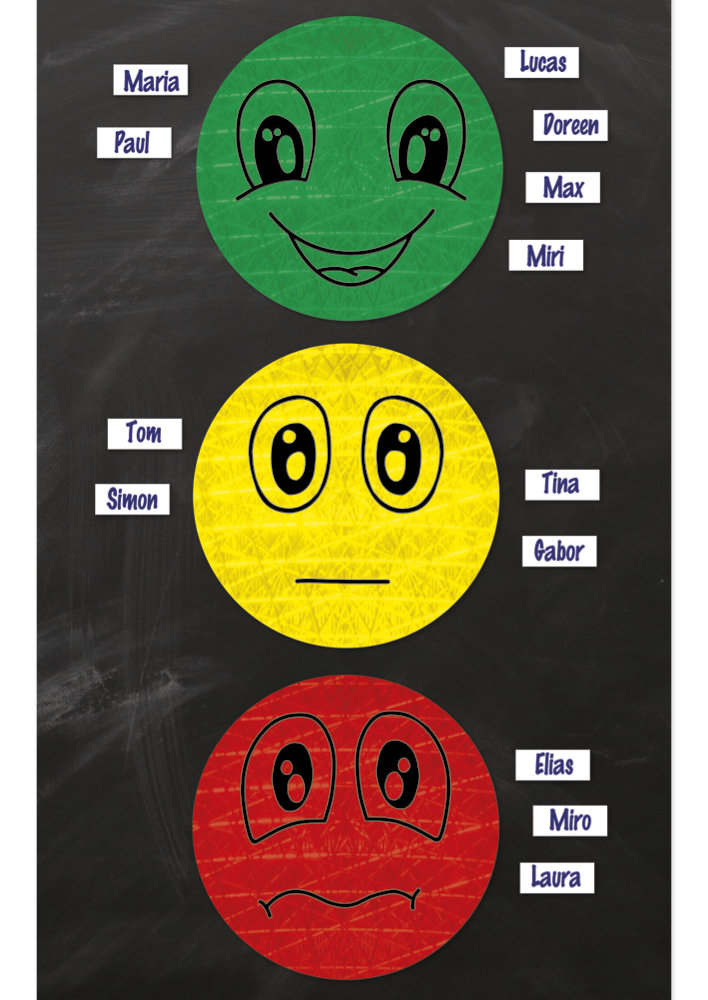

Behaviour Traffic Light, magnetic, approx. 25 cm ø, in a cardboard box
- Order number: 92703
-
- motivates pupils and encourages improvement
- provides insight into behaviour or participation in the lesson
- magnetic, therefore ideal for use on the board
TimeTEX Innovation
Demonstration video - Detailed product description
The behaviour traffic lights signal to pupils at a glance whether their behaviour in class or their participation in the lesson is in the "green zone". They also motivate and incentivise improvement when the signal is set to yellow.
They can also be used to show if someone is present (green), temporarily absent (yellow), e.g. at the toilet, or confirmed absent (red).
The colours can be arranged so that the green traffic light is positioned at the top. This then represents the goal and top position that can be reached.
The three traffic light faces and blank labels are made of magnetic film. They can be quickly and easily attached to the board or other magnetic surface such as info boards for everyone to see. The labels can be quickly and easily allocated to a traffic light colour using the 30 blank signs provided on which the pupils' names can be written.
The labels can be written on using dry, wipeable marker pens and then reused.
The traffic light faces can of course be used as desired; for example, during a discussion about the advantages and disadvantages of a topic or road safety education.
- motivates pupils and encourages improvement
- provides insight into behaviour or participation in the lesson
- magnetic, therefore ideal for use on the board
Size: each face approx. 25 cm diameter
Contents:
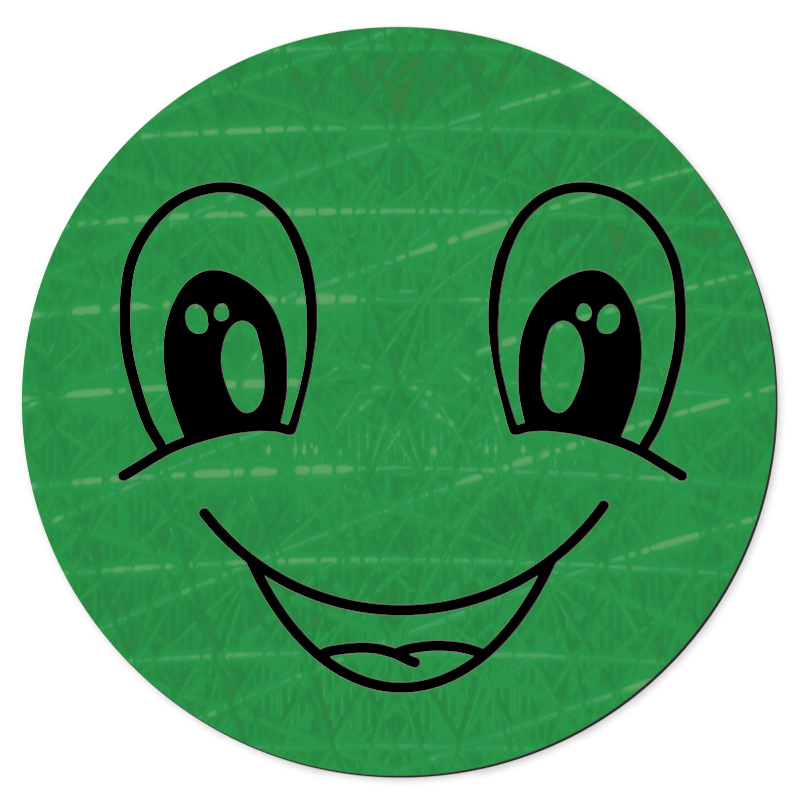
• 1 green traffic light face (funny), magnetic, approx. 25 cm diameter
• 1 yellow traffic light face (neutral), magnetic, approx 25 cm diameter
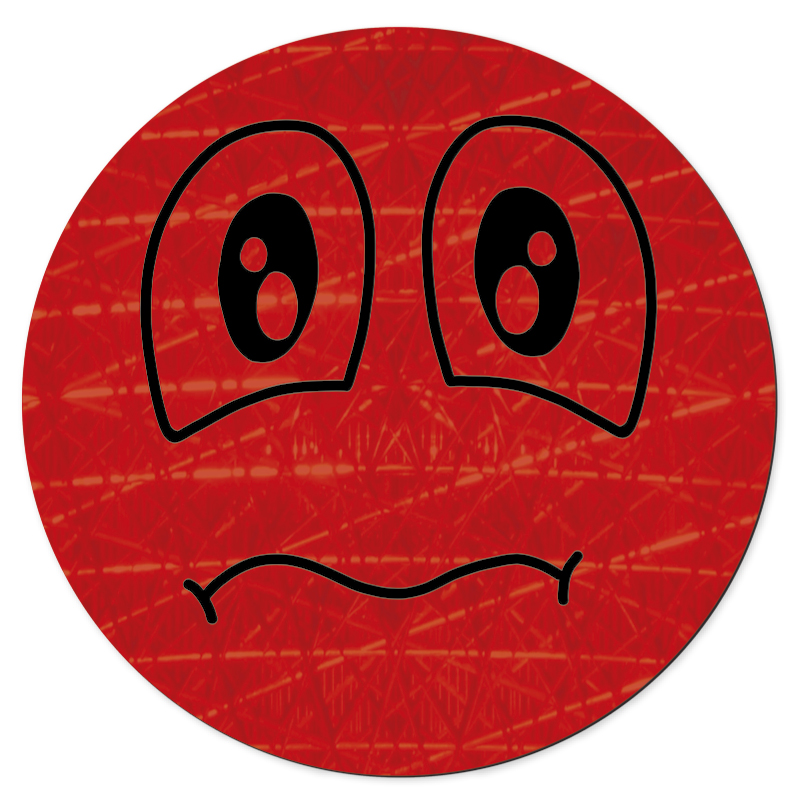
• 1 red traffic light face (sad), magnetic, approx 25 cm diameter
• 30 white magnetic blank labels, approx. 60 x 25 mm
Made in Germany!
Pedagogical tips:
The behavioural traffic light is an open system in which every teacher or every school sets the rules themselves. The 3 separate traffic light faces allows you to use either all 3 fields (green/yellow/red) or green/yellow or only green. The traffic light can be applied very flexibly, depending on your own preferences and pedagogical principles.
This is not about grades, rather about giving the child a reflection of their current behaviour. It is deliberately not "naming and shaming", because if a child breaks established rules of conduct, this is something that is not hidden from their classmates.
Every day usually starts with all name signs placed in the green field. Ideally, you can position the green traffic light face right at the top (opposite to a real traffic light), as it represents the top position or goal. If a child breaks the class rules or doesn't listen to the teacher's instructions, you could then advise them that if it happens again, their sign will be moved to yellow as a consequence. If this unusual behaviour is repeated, the teacher can put the name sign to yellow and, if that doesn't lead to improvement, to red. By behaving particularly well, pupils on red have the opportunity to get back into the yellow zone during the schoolday. The teacher could award a stamp on the collection card for pupils who stay in the green zone the whole day. If, for example, 5 stamps have been collected, something special could be offered, such as a "homework-free" voucher or "choice of duty". As mentioned above, each teacher/school determines the rules of the game for the respective class/school individually and at their own discretion.
The reward system described gives the pupils a positive incentive for sticking to the class rules and the instructions of their teacher. They are then shown straight away if they need to change their behaviour. What is important is that there no punishment for their name landing in the red zone. By behaving accordingly, each pupil has the opportunity to improve from red to yellow on the same day. The green zone shows which pupils have followed the rules that day.