
Group Project Set "Stick Insects", 7 pcs.

  • 81577
    • Indian stick insect (Carausius morosus, PSG1)
    • learn about stick insects and observe their development (metamorphosis)
    • ideal as a nature project for kindergarten groups and school lessons
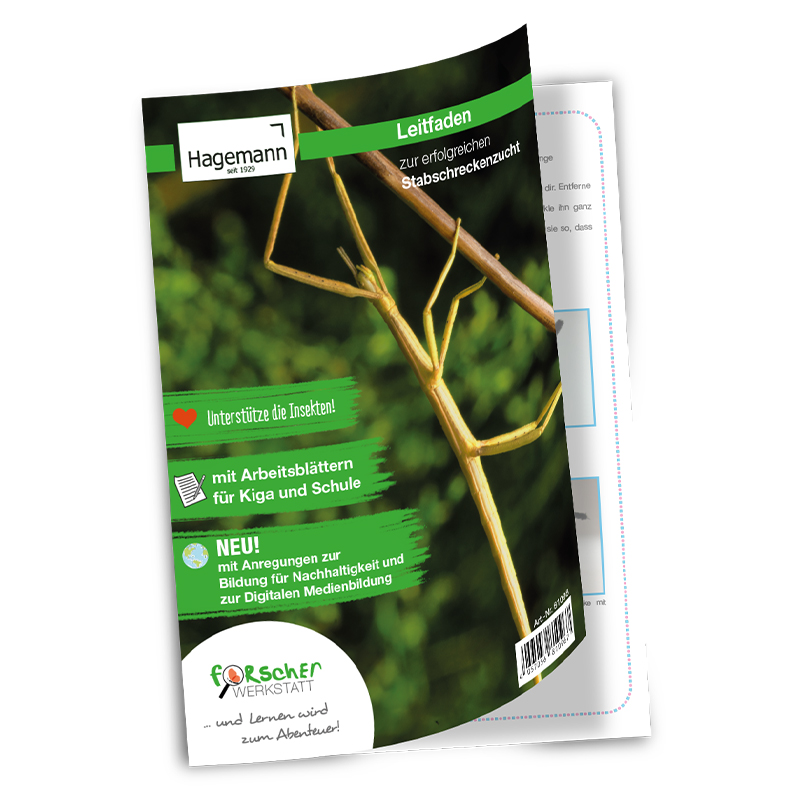
    • learning guide with factual information and suggestions on education for sustainable development, worksheets and access to interactive exercises
    • can be integrated in lessons without significant additional work
    • Shipping will take place on the date requested. Choose desired date in the shopping basket.
€99.90 *

incl. VAT plus shipping costs

For this article, you have to choose a desired delivery date in the shopping basket.

Available from week 44/2026

Observe and learn about stick insects! The Indian stick insect (Carausius morosus)... more
Group Project Set "Stick Insects", 7 pcs.

Observe and learn about stick insects!

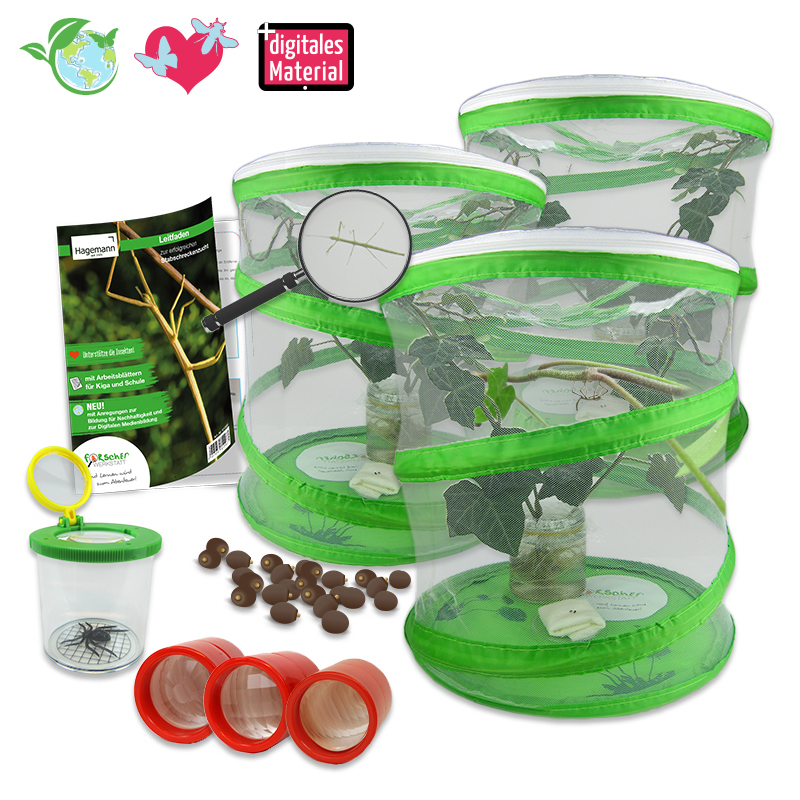
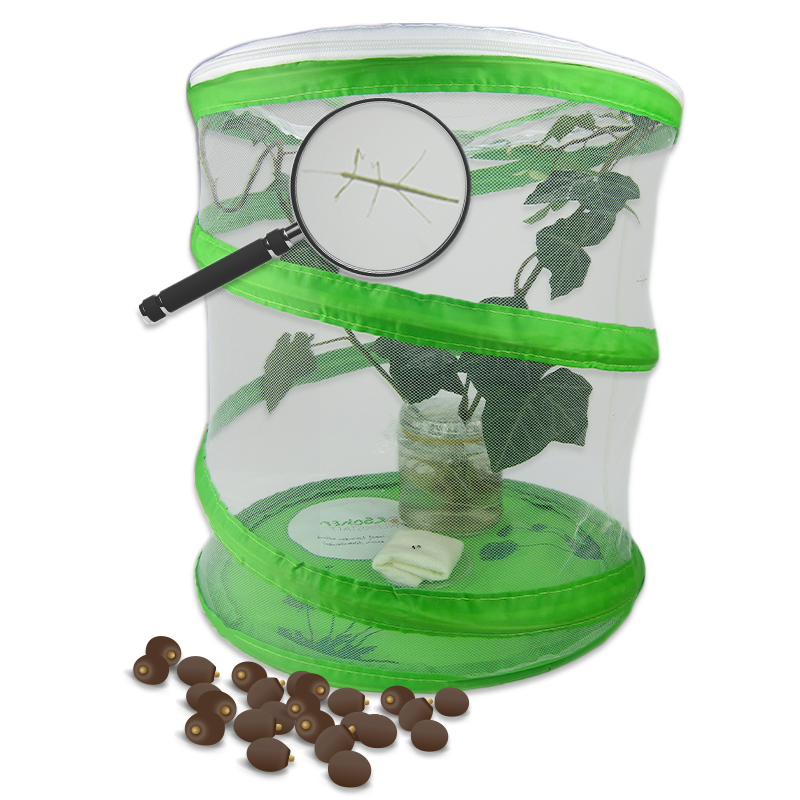
The Indian stick insect (Carausius morosus) lives mainly in the scrub vegetation of the rainforests on the Indian subcontinent and in Southern India, but can also be found in China and Japan. It is ideal for use in kindergartens and schools. The Indian stick insects are perfect for observation and are very easy to deal with. The set includes three breeding nets and three stick insects with eggs so that multiple groups can observe the development of the stick insects at the same time. The group project set is therefore ideal for kindergarten groups or school lessons.

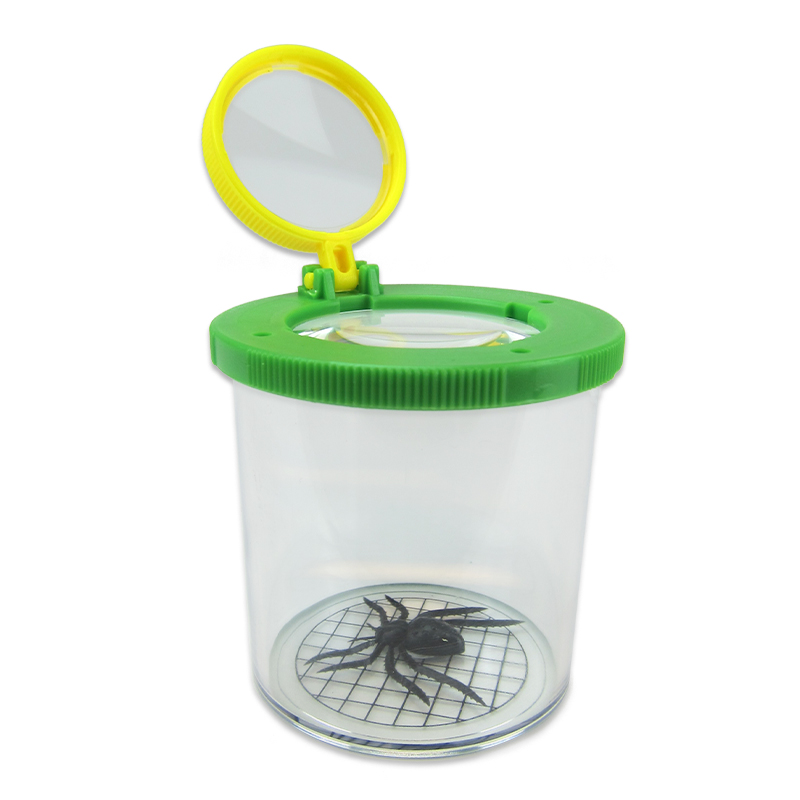
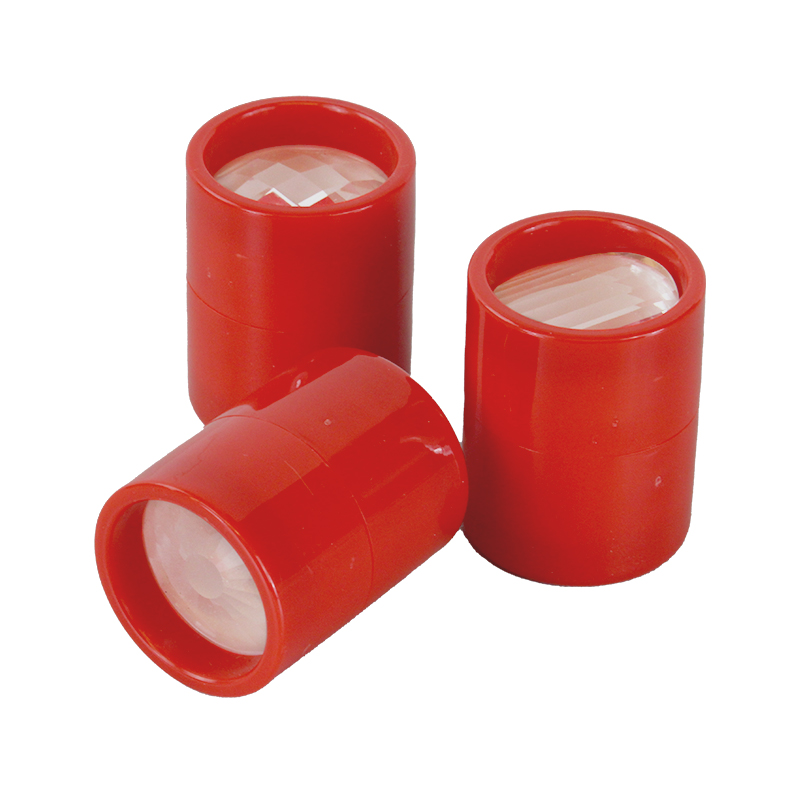
The group project set also contains a magnifying glass for better observation and the "how insects see" set that contains various types of lenses. With the faceted, spiral and ocelli lenses, children can discover for themselves how insects see (with illustrated instructions).

Education for sustainable development

Global warming, intensive farming, pesticides and shrinking habitats are endangering our insects. That is why it's so important for children to appreciate insects from an early age. Use this set to give children direct access to nature as part of education for sustainable development (BNE).

Stick insects are ideal here and useful for joint insect observation under ecological and social aspects:

  • Observing their fascinating camouflage behaviour and how they adapt to their environment gives children a positive insight into nature and its animals.
  • Researching stick insects and their noticeable strategies helps children overcome any fear, aversion and prejudice towards insects and other creatures. Initial aversion and fear of handling touching insects often turns into amazement, appreciation and enthusiasm.

Are my stick insects dead?
That is one of the most frequently asked questions. The answer is usually no. Stick insects play dead if touched and also let themselves fall from great heights. Mostly they then get caught between twigs and leaves, where their camouflage protects them against predators. After a while, sometimes up to a couple of hours, they will move again. Stick insects are active at twilight and at night. Their food intake occurs at night.

Mimesis
Stick insects offer an excellent example of mimesis (mimicry). Usually you have to hunt for these unusual insects between the plants. Thanks to the structure and colour of their body, they can easily be confused with twigs or sticks in the surrounding area, which can make them seem almost invisible.

Characteristics
The Indian stick insect is a type of ghost insect and so is part of the family of Phasmatodea. Both females and males are flightless, stick-shaped and elongated.

  • Female: body colour green to brown, front legs in fully grown insect reddish in colour, grows up to 9 cm long
  • Male: slightly more delicate, usually a dark brown colour, antennae longer than the front legs, grows up to 6 cm long

Development (metamorphosis)
Since only 0.1% to 0.2% of the hatched insects are male, the adult females also reproduce through apomictic parthenogenesis. This is a form of asexual reproduction. In this case, the offspring come from a single unfertilised egg (mitotic division, equatorial division). Adult stick insects (imago) live for about one year.

The fully grown stick insects usually lay their eggs at night on the ground. A stick insect lays up to 3 eggs per night and up to 1,200 eggs in its entire life. The eggs are approx. 1.5 mm long, are oval in shape, and have a closure on one side that looks bit like a little cork or stopper. The eggs do not have to be fertilised.

Depending on the temperature, it takes 2 to 4 months until the little stick insects (nymphs) hatch out of the eggs. At 23 °C this takes about 80 days, at 16 to 18 °C it takes 14 to 20 weeks. The development from nymph to imago (baby to adult) takes 3 to 8 months. Stick insects shed their skin four to five times. The temperature while the insect is developing inside the egg determines whether it will be male or female. This offers an interesting idea for an educational project.

Ideal framework conditions

  • Temperature: 18 °C to 28 °C, ideally 24 °C

Diet
Stick insects feed exclusively on plants. The Indian stick insect eats:

  • blackberry leaves
  • raspberry leaves
  • stinging nettles
  • foliage from hazel, hornbeam and ivy

If you spray the leaves with atomised water, you can see how the insects take in fluid via the droplets. However, the liquid contained within the leaves is completely sufficient for the stick insect's diet.

Note
If you put a container with water inside the net or the terrarium, you must cover the surface of the water. Stick insects cannot swim, and the nymphs are particularly prone to drowning in containers of water.

Since stick insects are not native to this region, they must not be released into the wild, as stipulated under government legislation on the protection of species.

We need 3-4 weeks between ordering and delivery because we only breed the nymphs and eggs for you once you have placed your order.

  • Indian stick insect (Carausius morosus, PSG1)
  • learn about stick insects and observe their development (metamorphosis)
  • ideal as a nature project for kindergarten groups and school lessons
  • learning guide with factual information and suggestions on education for sustainable development, worksheets and access to interactive exercises
  • can be integrated in lessons without significant additional work
  • Shipping will take place on the date requested. Choose desired date in the shopping basket.

Contents:

  • 3 breeding nets (foldable)
  • 3 juvenile stick insects (nymphs)
  • eggs of stick insects
  • How insects see, 3 pcs. (faceted lens, spiral lens and linear lens)
  • Hagemann magnifying box
  • learning guide with factual information and suggestions on education for sustainable development, worksheets and access to interactive exercises
Warning / Safety Instructions

Teaching materials

Product information

This product is designed for teaching and education purposes only under the supervision of an adult (for example, a teacher/trainer).


Customers also bought
Viewed
Maximale Zahl der Zeichen für dieses Eingabefeld erreicht