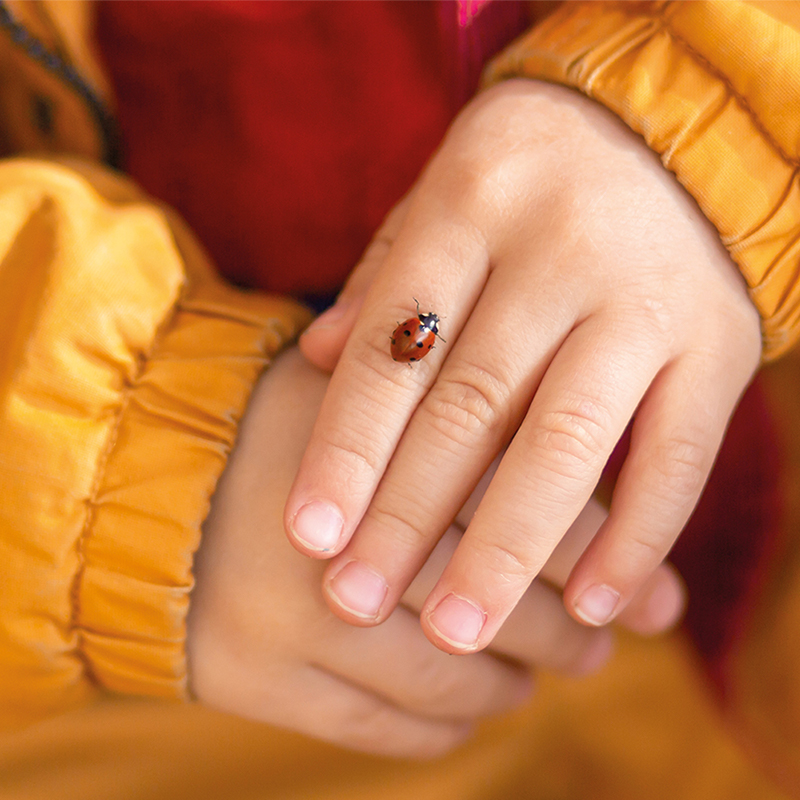


Follow-Up Order Ladybird Larvae
- Order number: 80317
-
- Larvae follow-up order for the ladybird breeding set
- 1 unit = 10-15 larvae with sufficient food, instructions, copy templates, observation diary
- Shipping will take place on the date requested. Choose desired date in the shopping basket.
- Detailed product description
incl. VAT plus shipping costs
Available from week 11/2027
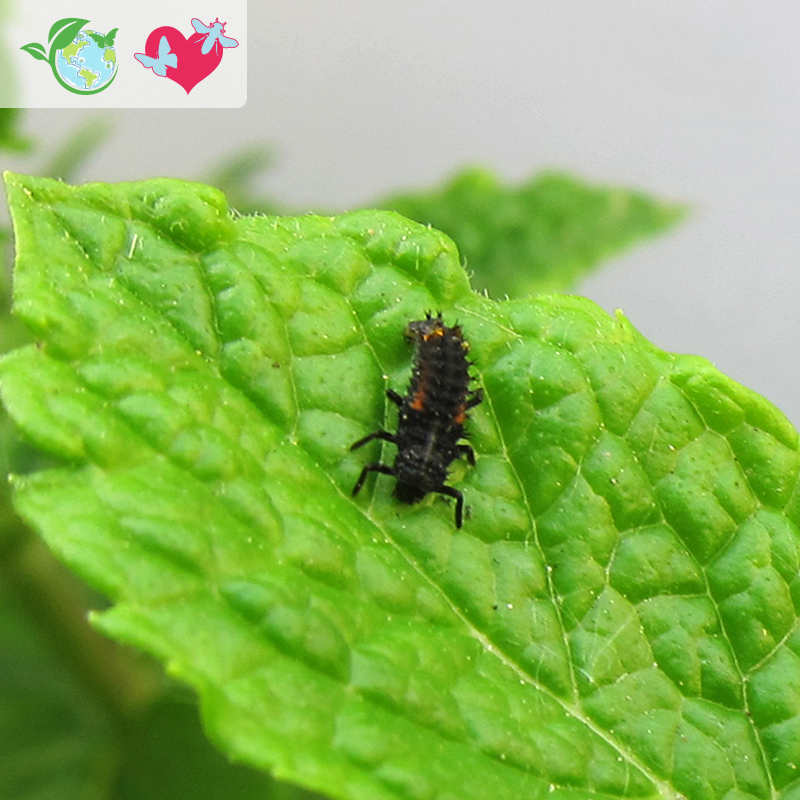
This allows you to order more ladybird larvae so you can use the ladybird breeding set again during the next ladybird season.
Please note, depending on the weather, number of orders, and breeding success, it can sometimes take 2 weeks' notice before the larvae can be sent out.
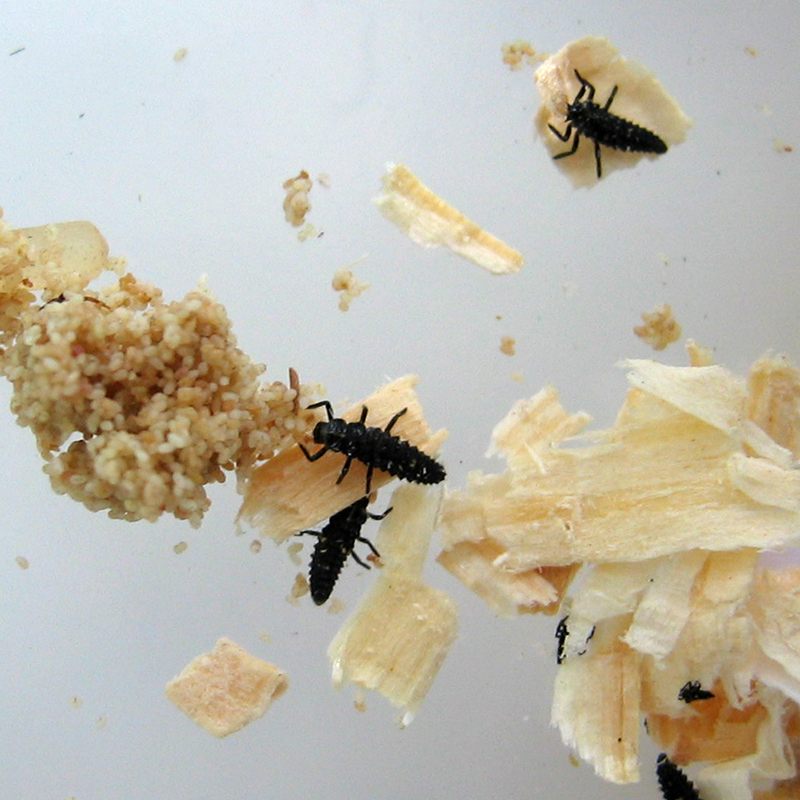
The larvae (10-15, with sufficient food) will be received on your requested date. The food is contained in the larvae transportation container. Transfer the ladybird larvae with the accompanying food into the breeding box from your ladybird breeding set.
You will need to allow approx. 30 days for your project. During this period, you can watch as the larvae turn into ladybirds (just like in nature, it is also possible here that not all will survive).
If you want to give these larvae as a gift, we also have a gift voucher option available.
More ladybird larvae can be ordered subsequently from March to October.
Portrait two-spotted ladybird:
The native two-spotted ladybird (Adalia bipunctata) from the ladybird family (Coccinellidae) is very widespread in Europe and Asia. They live in our gardens and parks and overwinter under moss and bark, but also in special ladybird nesting places. Sometimes they come indoors to overwinter, but in that case the ladybirds should be put in a cold place (e.g. the attic).
They grow to about 3.5-5.5 mm in length and come in two varieties: red with two black spots, or black with four to six red spots. This does not indicate the sex of the animals. For Adalia bipunctata 80-90 % of the animals born are female. The two-spotted ladybird is one of the ladybirds that is keenest to mate. They begin mating after overwintering, changing their partner every two days. The ladybird lays its eggs close to an aphid colony. The ravenous larvae consume about 150 aphids per day. After shedding four times, the larvae pupate and after approx. 7 days they emerge as a ladybird. They take on their final colouring over the next few hours.
Development:
- Egg stage: 5-6 days
- Larvae stage: 10-15 days
- Pupal stage: 6-8 days
- Adult ladybird (lays eggs after 1-3 weeks)
Scope of delivery:
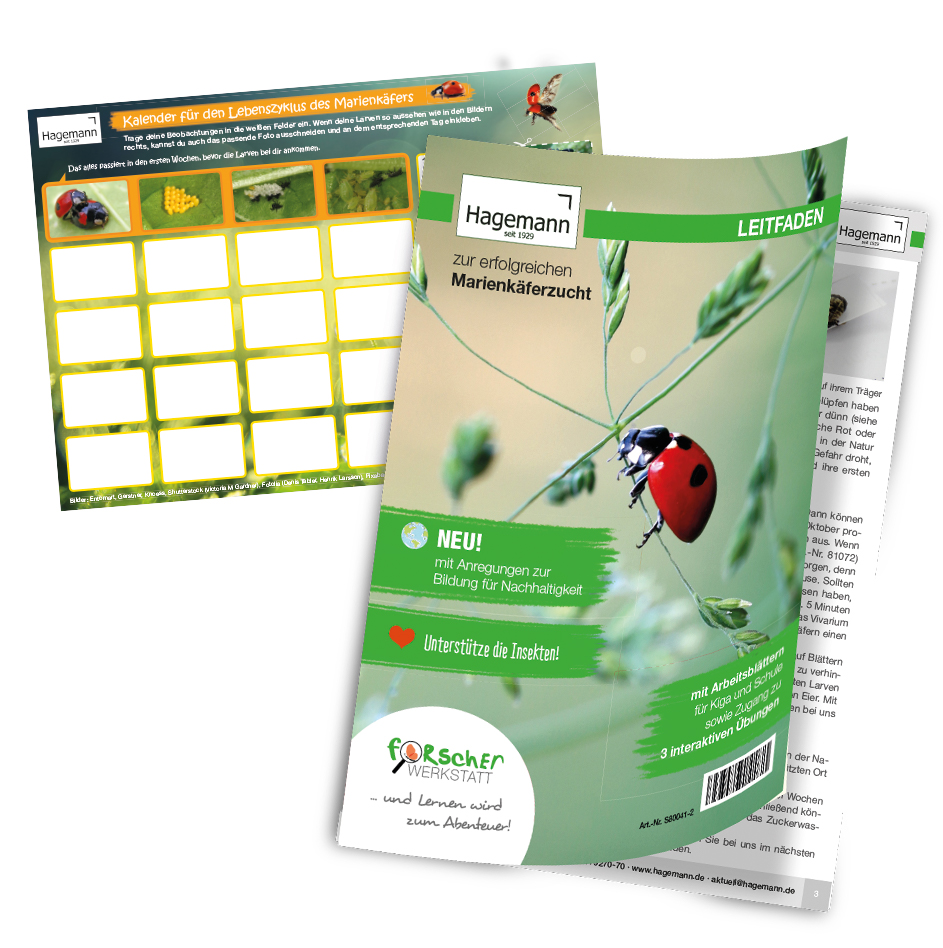
- calendar for observations (DIN A4)
- 1 unit = 10-15 larvae with sufficient food
- detailed instructions
- 3 worksheets for nursery and primary school
Age specification:
Suitable from age 4
Note: we always ship the larvae at the beginning of the week, otherwise they would be in transportation for an unnecessarily long period over the weekend. Consequently, larvae deliveries are usually received in the course of the week.
Teaching materials
Product information
This product is designed for teaching and education purposes only under the supervision of an adult (for example, a teacher/trainer).