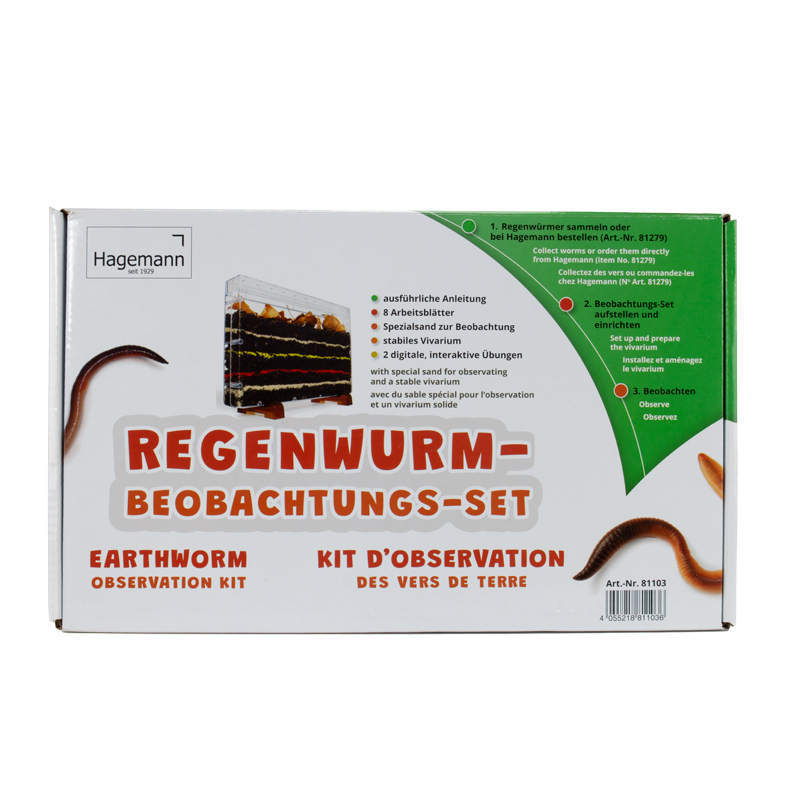

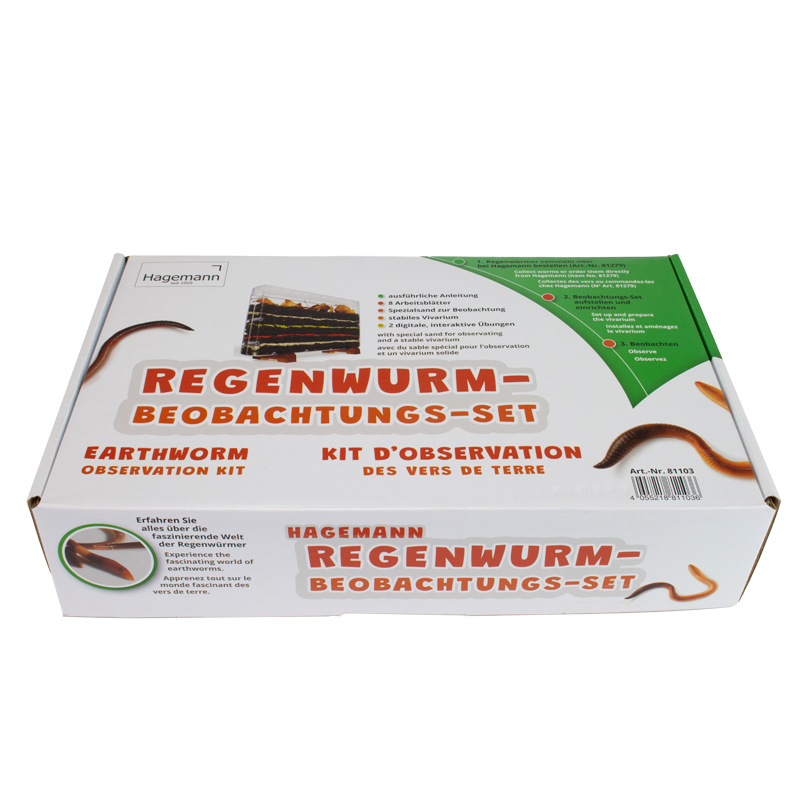
Observation Set "Earthworms", 8 pcs.
- Order number: 81103
-
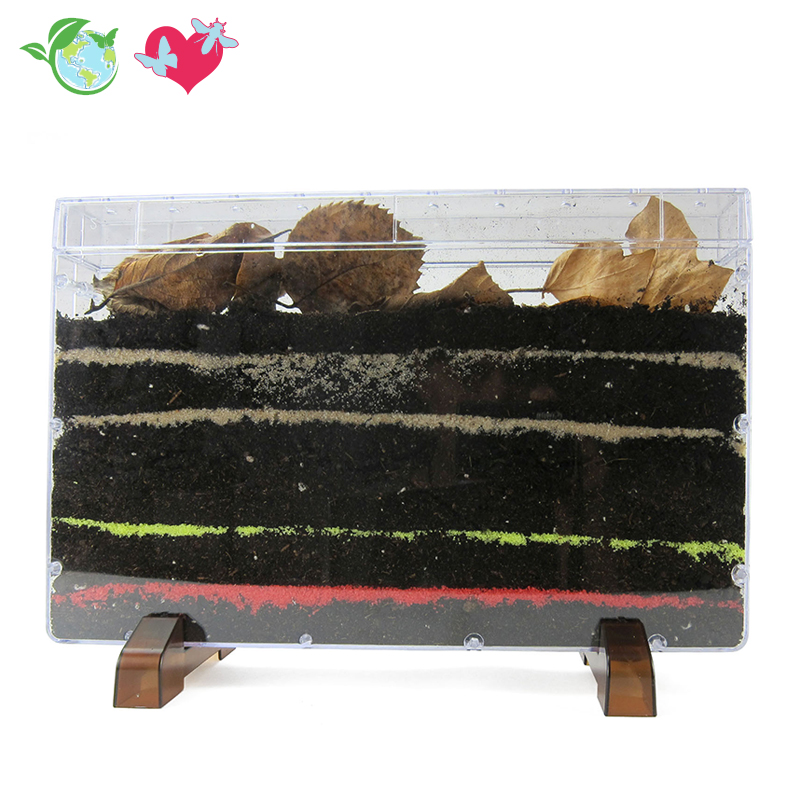
- watch how earthworms dig over the soil and break down leaves
- colourful sand means the soil mixing can easily be seen
- with instructions and worksheets
- earthworms not included in the set
- Detailed product description
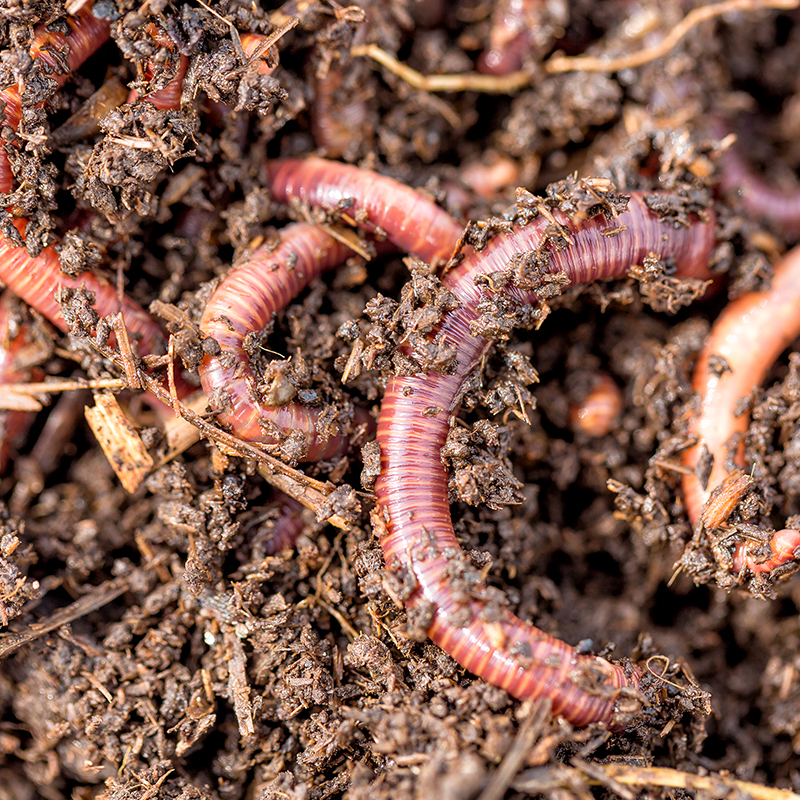
The earthworm is adapted for life in the ground!
Observing nature in nursery and primary school
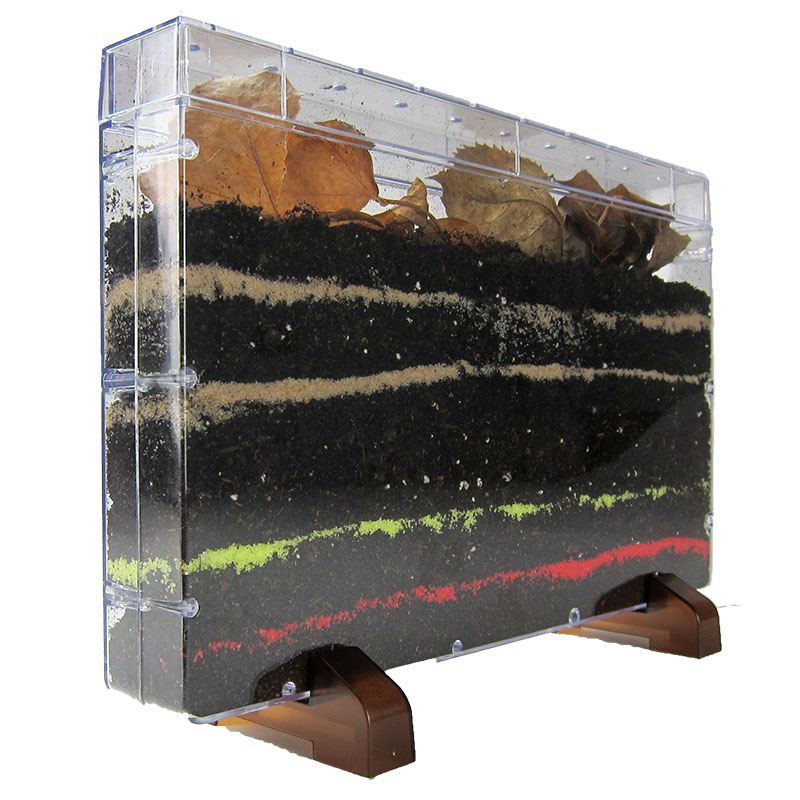
With this sturdy earthworm observation set, children can see how the industrious earthworm gradually mixes the soil and leaves and breaks down other organic matter. Thanks to the colourful layers of sand, it is easy to detect the soil being mixed.
Plenty of oxygen is supplied to the earthworms thanks to the air holes at the top. The blackout cover creates good living conditions for the worms so they can go about their work undisturbed when they are not being observed.
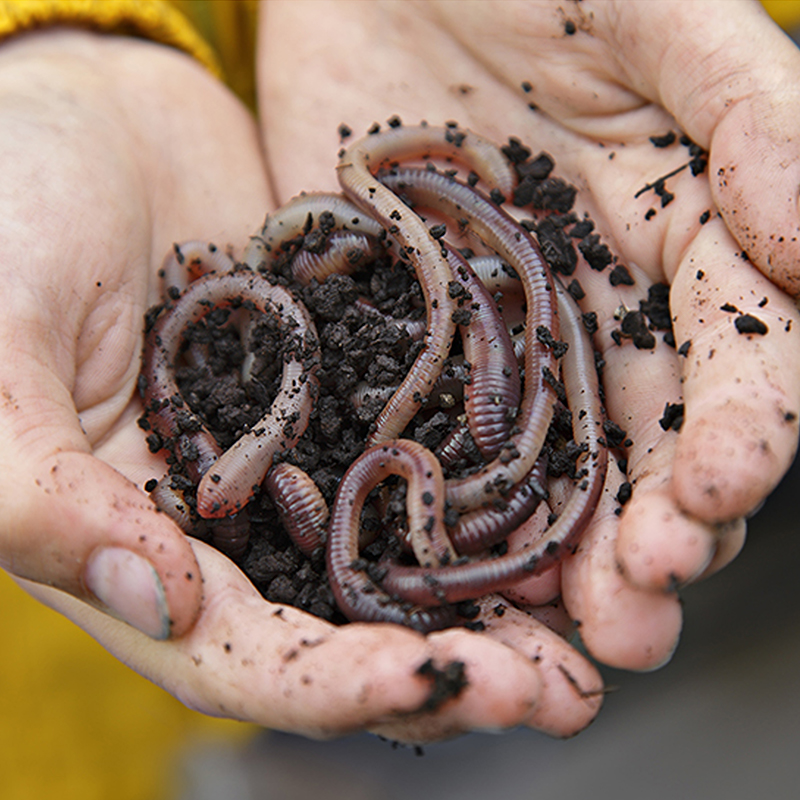
City kids, in particular, are often completely unfamiliar with the earthworm. That's why the earthworm is an ideal object of study, especially in nursery and primary schools (general studies).
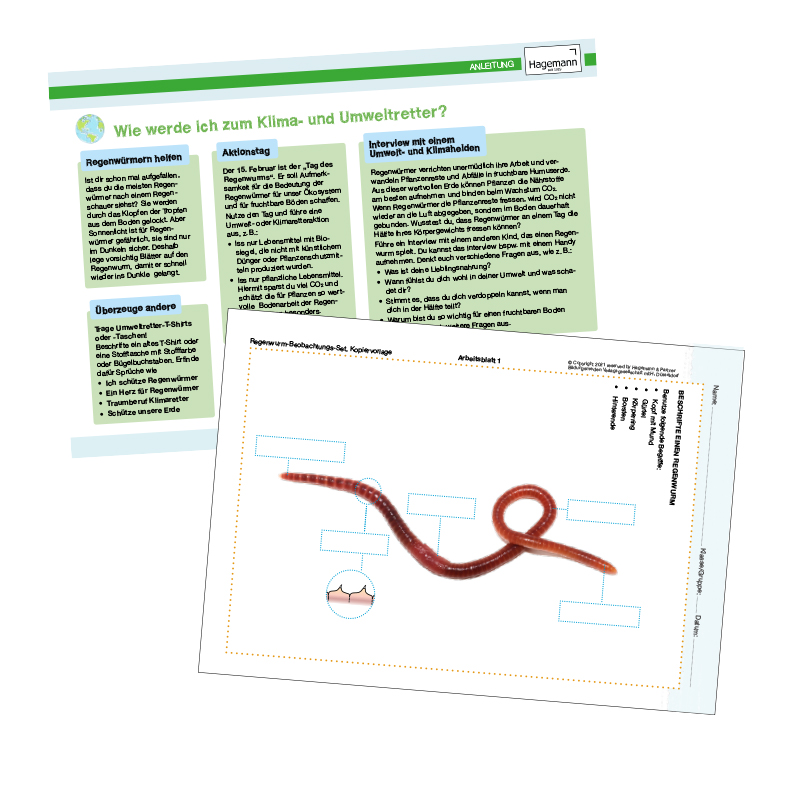
Experiment ideas include e.g. determining the length and weight of the worm, observing and describing how it moves (how does an earthworm crawl?), investigating earthworm bristles, drawing an earthworm and describing its behaviour in soil and in water.
The earthworm in lessons: biology
In biology lessons there is the option to do a research project on the earthworm. Its special characteristics, living habits, its structure, metabolism and reproduction as well as its significance for soil development: all these are important topics which could form a focal point for study.
Investigations e.g. on the earthworm's sensory organs, from asking questions to formulating hypotheses, planning and carrying out experiments, validating, evaluating and documenting results. There are a wide number of options for use in lessons at secondary school level. The earthworm observation set is an essential aid and substitute for a terrarium system.
The earthworm in hot, cold and dry conditions
Ideal living conditions for earthworms involve temperatures between 10 °C and 15 °C, and for compost worms between 20 °C and 25 °C. If it is colder or warmer, the earthworms will be less active or completely inactive. Consequently, the earthworm observation set must be set up in the relevant temperature range. You can check and log the temperature using the maximum-minimum thermometer.
Just like insects, earthworms go into hibernation during winter. It has not yet been researched how long earthworms can withstand low or high temperatures, so this would be an interesting project for taking part in the "Jugend forscht" competition (aimed at young German scientists). There are lots of new and interesting questions, particularly in light of the extreme weather conditions occurring due to climate change. Under appropriate conditions, you can also observe earthworms during winter.
- watch how earthworms dig over the soil and break down leaves
- colourful sand means the soil mixing can easily be seen
- with instructions and worksheets
- earthworms not included in the set
The soil in the observation container should be moist but it must not be waterlogged or acidic. By using indicator paper (not included in the scope of delivery), you can check, adjust and log the pH value.
Contents:
- 1 container made of synthetic glass
- 2 supporting feet made of plastic
- 1 sachet granules
- 1 cover as blackout
- detailed instructions
- 3 worksheets
The teaching materials contain lots of valuable ideas for environmentally friendly, climate-aware behaviour and to educate children about sustainable development. These ideas are flagged with the "We are protecting our earth symbol" and can be quickly identified.
Dimensions container: approx. 29 x 19 x 4 cm
Warning information 1
Caution!
Not suitable for children under 36 months.
Small parts.
Risk of suffocation.