
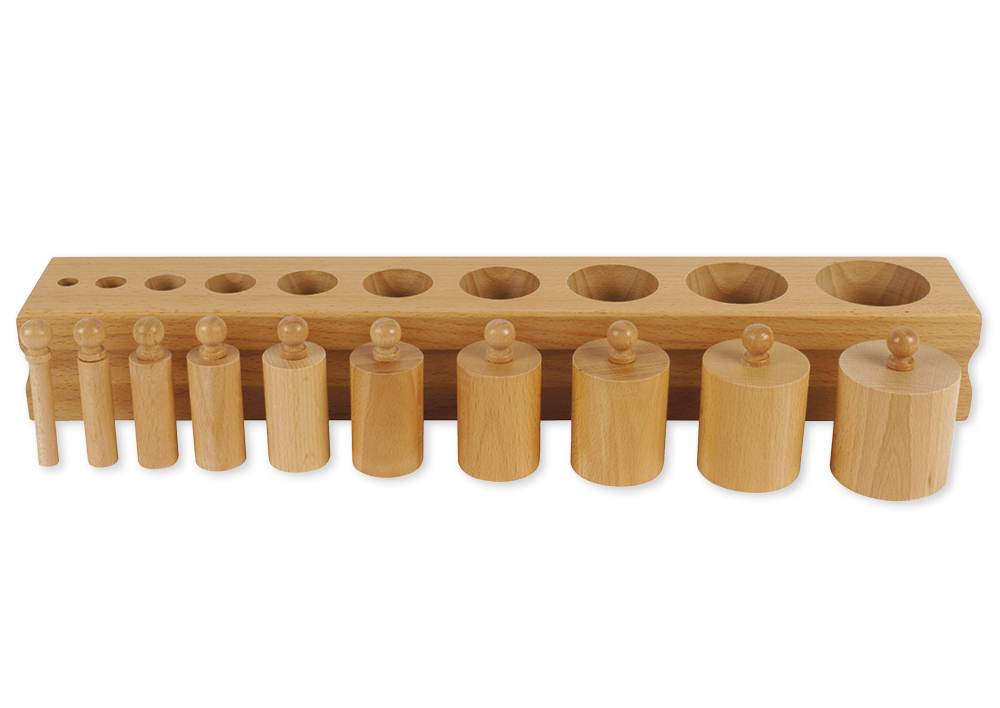
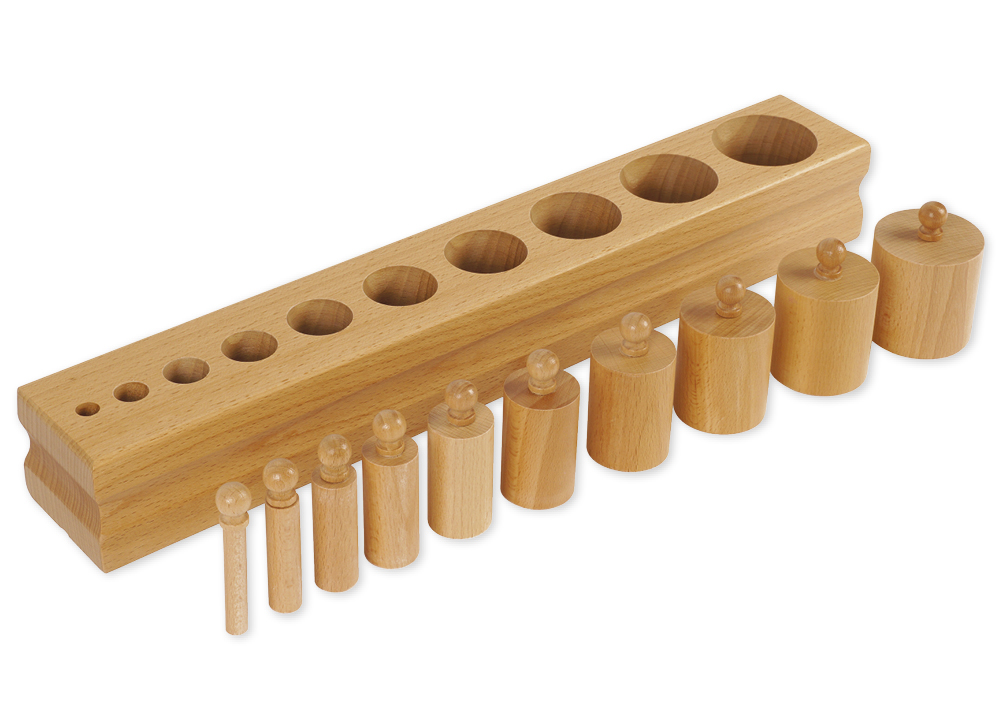
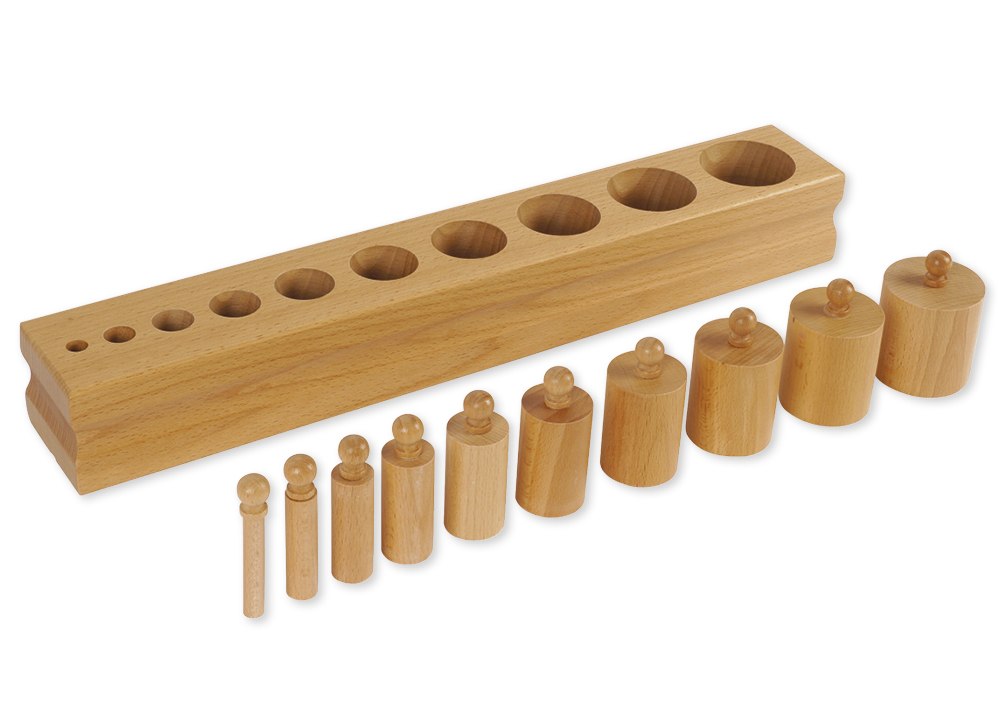
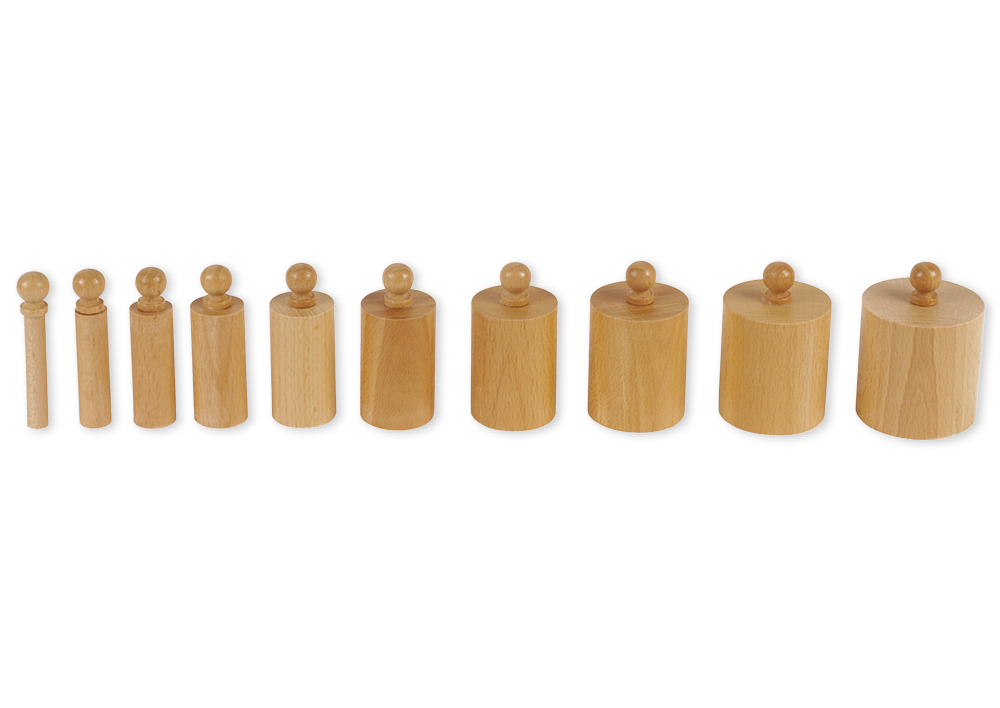
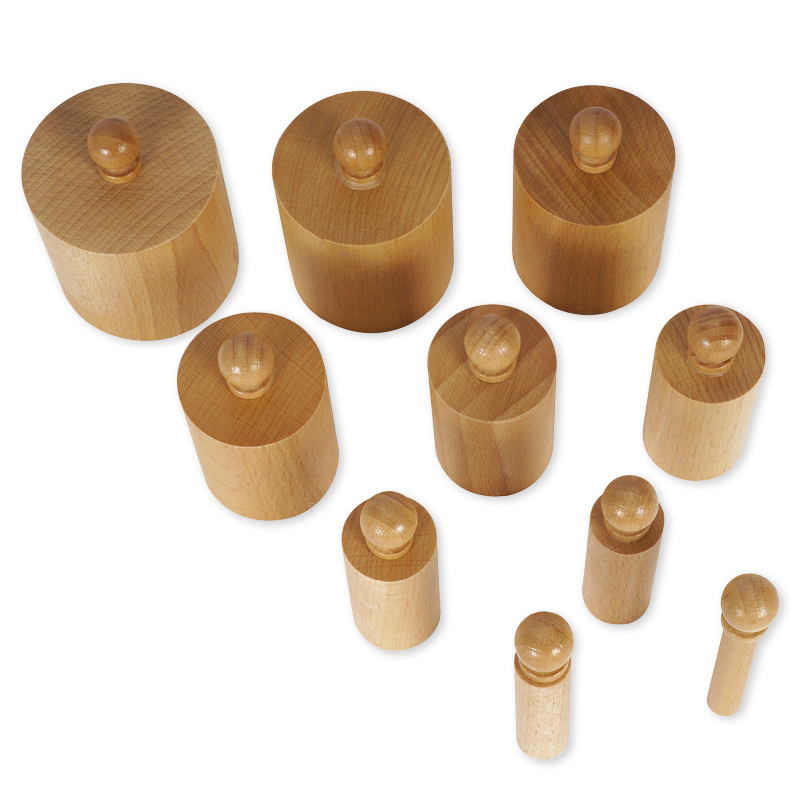
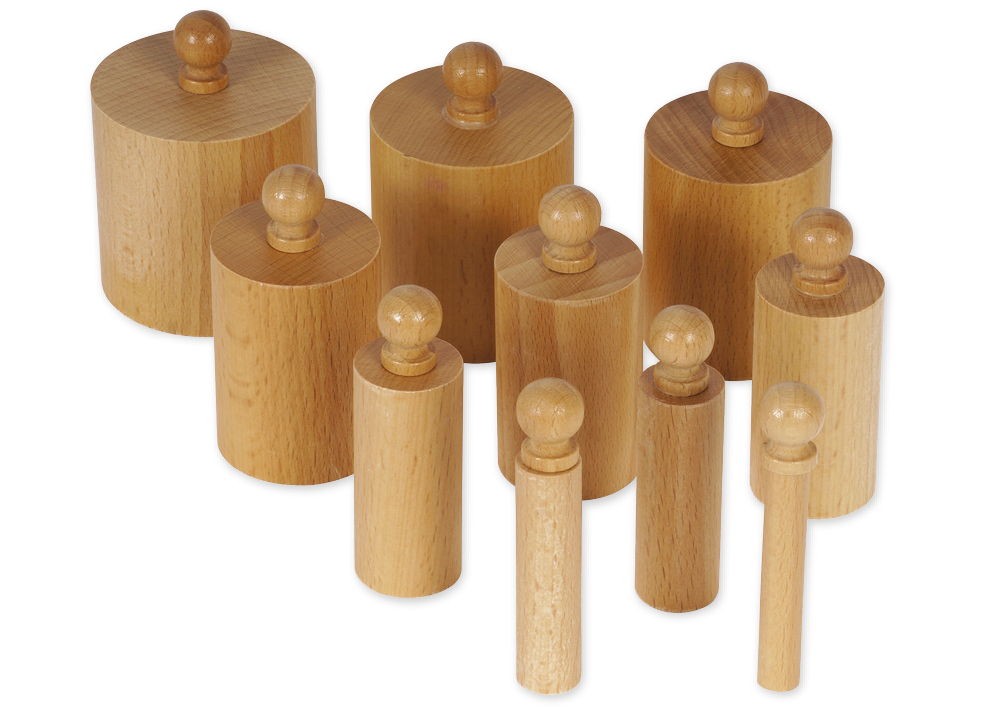
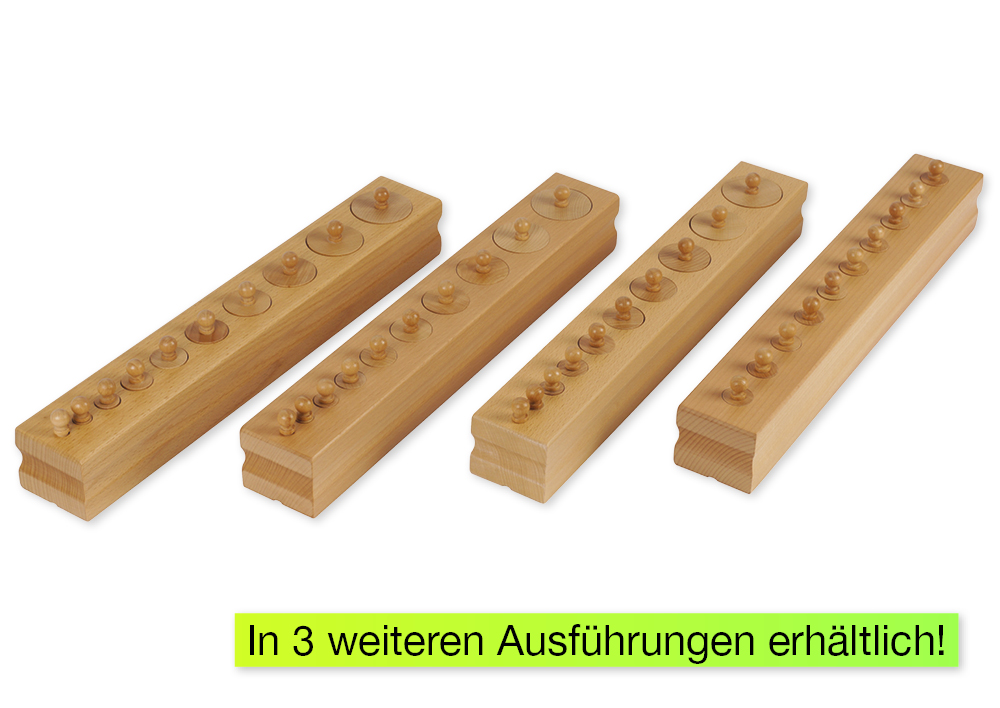


TimeTEX Cylinder Block 2 "Montessori Premium"
- Order number: 94246
-
- develop visual perception in the form of size differences
- name lessons (long, longer, short, shorter ...)
- indirect: preparation for writing by training the gripping muscles of the writing fingers (pencil grip)
- indirect: Insight into the formation of sequences
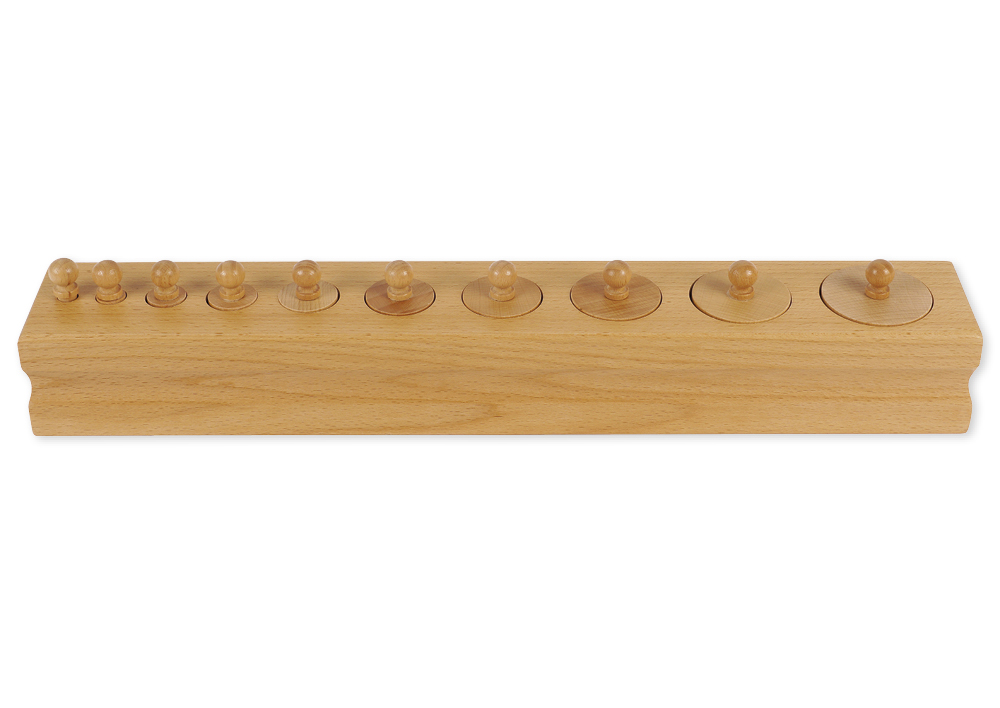
- control of error, as each insert cylinder only fits into its own opening

- Detailed product description


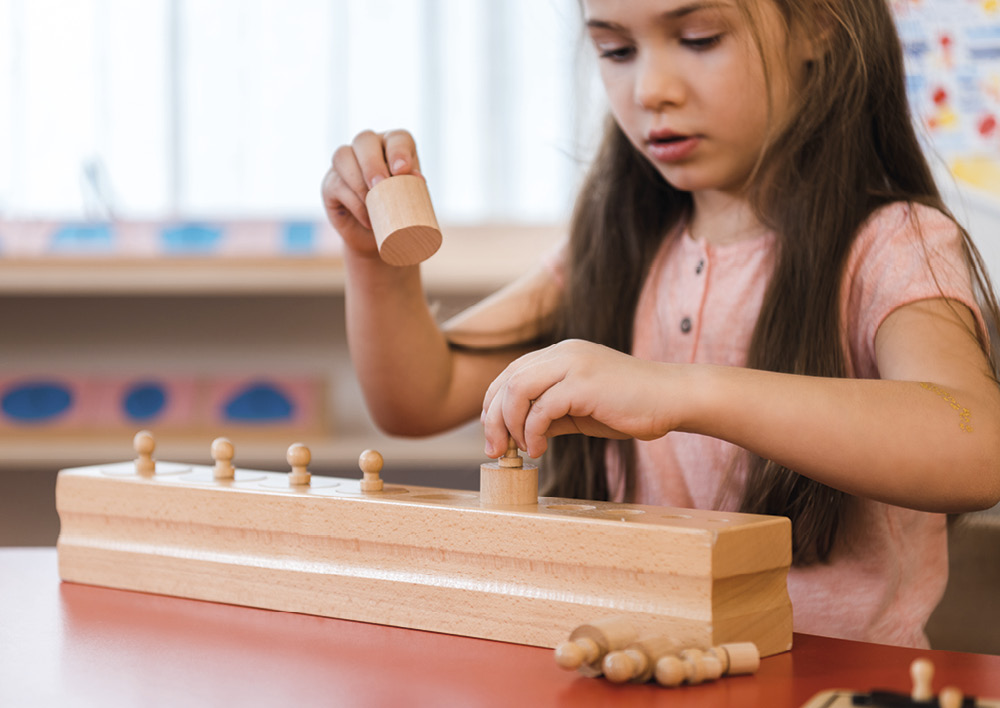
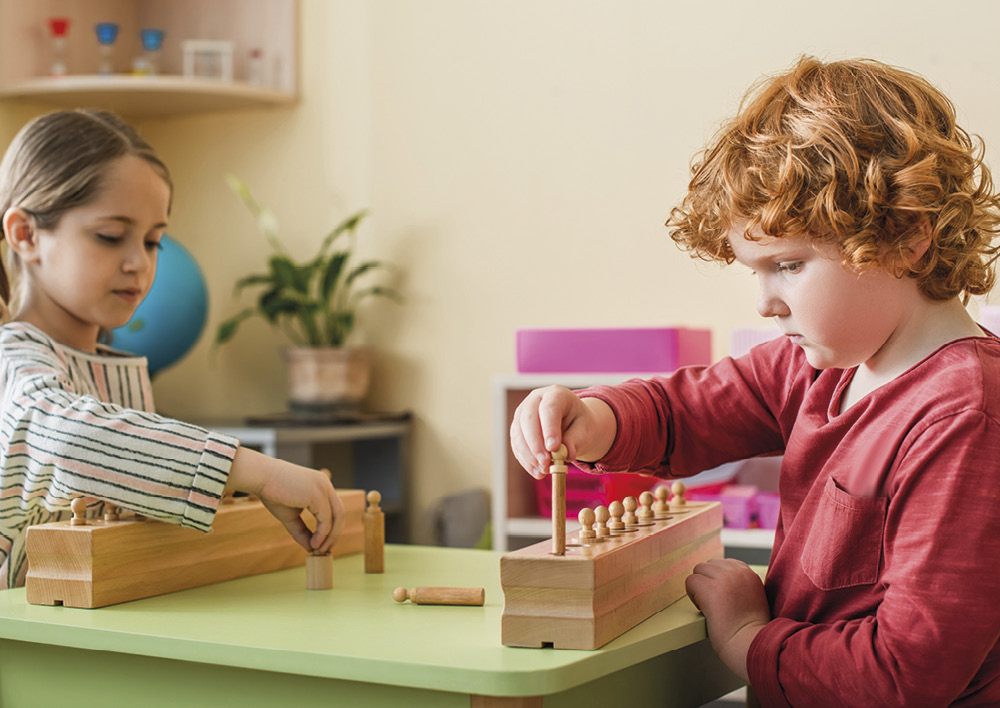
The Cylinder Blocks are introduced to children as young as 12 months! The children are familiarized with all four Cylinder Blocks one after the other. The wooden grips located at the top of each cylinder provide the child with the opportunity to repeatedly practice the pensil grip (or three-point grip). In addition to practicing other direct targets, the child spends a lot of time holding the hand/arm over a horizontal surface, which helps to develop the brachial movements (shoulder muscles).
The Cylinder Blocks are used to make differences in width and height tangible. Children find the cylinders an easy introduction to word lessons such as long, longer, short, shorter etc.
Learning opportunities:
- development of visual perception in the form of size differences
- record names (long, longer, short, shorter ...)
- indirect: Preparation for writing by training the gripping muscles of the writing fingers (pensil grip)
- indirect: Insight into the formation of sequences
- control of error, as each cylinder only fits into its own opening
Suitable for: kindergarten, elementary school and homeschooling
Wooden block dimensions: approx. 46 x 7 x 8 cm
Contents:
- 1 Cylinder Block #2 made of lacquered solid wood
- 10 cylinders with the same height and increasing diameter
Methodological and pedagogical tips:
First presentation: The teacher clearly demonstrates how to take a cylinder out of the block with three fingers, looks at the bottom of each cylinder and places it on the table in front of the Cylinder Block. In this way, the teacher takes out all the cylinders one by one and places them on the table in a jumble. Then he/she takes a cylinder, looks into the cavities and inserts the cylinder. Then he/she continues with the others until the child takes over. The child can then continue while the teacher stands back and observes from a distance. Does the child use both hands during the exercise?
There are 4 different Cylinder Blocks. These address the following concepts:
- block 1: small-large
- block 2: from thin to thick (high-low)
- block 3: from flat to high (narrow-wide)
- block 4: from small, flat to high thick, same diameter
The order of presentation goes from easy to difficult:
- large-small (all dimensions, lengths, widths and heights differ by half a centimeter per cylinder)
- large-small and high-low, but opposite to each other
- thick-thin (or wide-narrow)
- high-low. If the children are not yet ready, you can wait a while. It is really a very difficult task for young children because all the holes are the same size.
In this lesson, the child takes over the handling as soon as you see that they want to start. Do not intervene if a child makes mistakes in handling. Pick up the block again at a later time to give a demonstration and correct certain behaviors. You can then demonstrate the next day how to carefully remove and reinsert the cylinders, for example.
Or you can explain how to use the buttons. If a child makes mistakes when reinserting the cylinders, do not correct them. The child will realize that the last cylinder does not fit. The child will not want to repeat it if you intervene. It is better to correct and intervene during imaginary play.
Sometimes turning the Clinder Block over is the only solution to get a cylinder out of the wrong hole. If necessary, you can keep a knitting needle or skewer in the room to remove the cylinder from the hole if it gets stuck.
When practicing the senses, it is not important for a child to learn the skill quickly. Fast growth is bad growth. Rather, the purpose of this sensory activity is to perfect the senses. So it's okay for a child to tackle this material as often as possible. If a child picks up the cylinders for the first time and is already good at everything, you've probably offered them too late.
Memory games:
- the cylinders are removed from the holes. An "indicator" is taken from one of the holes and the child tries to find the correct cylinder
- the cylinders are now together in a different place in the room. The child retrieves the correct cylinder one by one, placing the "indicator" in a different hole each time.
- retrieve the cylinders with the help of an indicator, but now the cylinders are scattered around the room, in clearly visible places.
These games can also be played with several cylinder blocks.
Create a row without the cylinder block:
The (empty) Cylinder Block is turned over and the educator shows how to put the cylinders in the correct order. The cylinders are placed back in the block to check. Variations of this:
- start with the thickest or the thinnest or in the middle
- with blindfolded eyes
- with several blocks at the same time
Games with a sequence:
- while the child is not looking, the educator removes a cylinder from the row and pushes the row back up. The child tries to determine where the cylinder belongs.
- the same, but now the teacher does not show the removed cylinder. The child tries to determine where one is missing.
- the child is blindfolded and feels the cylinder that was taken out of the row. The child tries to put the cylinder back in the right order.
- the child is blindfolded and tries to feel where a cylinder is missing in the row.
- name lessons are preferably carried out first with the Pink Tower and the Brown Stair. The Cylinder Blocks are well suited for the low/flat and narrow/wide lessons.
Material game:
Each child is given a cylinder. The children put the cylinders in the correct order together. Several blocks can also be used here.

Under the „Montessori Premium“ brand, we offer high-quality and excellently crafted Montessori materials that are very popular. If these products or parts thereof are made of wood, they are FSC-certified.
Teaching materials
Product information
This product is designed for teaching and education purposes only under the supervision of an adult (for example, a teacher/trainer).


